
Where Stone & Sculpture
Meet the Ocean
Mahabalipuram is UNESCO’s most extraordinary coastal temple city — home to the iconic Shore Temple and monolith caves carved from living rock. Book your cab from Tirupati with Sevenhills Tours — 150 km away, perfect full-day heritage tour.
Our Vehicle Fleet & Pricing
150 km from Tirupati · Available for instant booking · Transparent rates, no hidden charges
| Vehicle Type | Seating Capacity | Price (One Way) |
|---|---|---|
| Sedan | Etios / Dzire (4 + 1) | ₹6,800 |
| Ertiga | 5 + 1 | ₹8,100 |
| Innova | 7 + 1 | ₹9,000 |
| Innova Crysta | 7 + 1 | ₹10,500 |
Mahabalipuram’s UNESCO Heritage Masterpieces
A complete artistic and architectural ensemble spanning nearly 1,400 years of South Indian sculptural tradition — all carved from living rock by Pallava artisans.
Book Your Mahabalipuram Cab Today
180 km from Tirupati · 4 hours drive · UNESCO World Heritage tour · Beach & monuments. Call now for instant booking.
The History of Mahabalipuram
From a royal harbour city under the Pallavas to a UNESCO World Heritage Site — Mahabalipuram’s journey reflects the artistic pinnacle of ancient South India.
The Port City of Pallava Glory
Mahabalipuram, known in ancient texts as “Mamallapattanam” (the port city of Mamalla — the legendary Pallava king Narasimhavarman I), was one of the most important maritime trading ports of ancient South India. Roman traders, Chinese merchants, and Southeast Asian seafarers all visited this thriving harbour city. Epigraphic evidence shows trade connections across the Indian Ocean, making Mahabalipuram a cosmopolitan centre during the 6th-7th centuries.
The city’s strategic location on the Bay of Bengal coast made it both economically significant and artistically vibrant. The ocean trade wealth funded the artistic ventures that would later make Mahabalipuram legendary in the annals of world heritage.
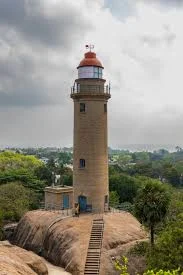
The Epoch of Artistic Revolution
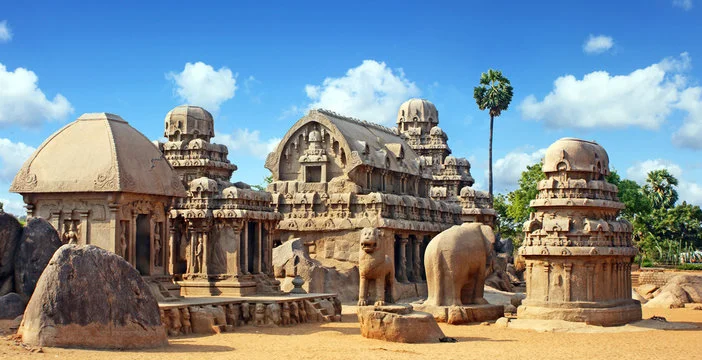
Under King Narasimhavarman I (Mamalla, 630–668 CE), Mahabalipuram became the epicentre of South Indian artistic innovation. The king was himself known as “Mamalla” (the “Great Wrestler”) — a patron who invested royal resources in creating the most ambitious sculptural and architectural vision of his age. This period saw the carving of the Five Rathas (monolithic temples) and the breathtaking Arjuna’s Penance relief sculpture.
These monuments represented an entirely new architectural vocabulary for South India. The Rathas, carved from solid granite boulders, were experimental forms that would later influence the development of freestanding temple architecture throughout the region. The precision of stone carving, the anatomical accuracy of sculptural figures, and the narrative richness of scenes like Arjuna’s Penance set standards that would define South Indian art for centuries to come.
India’s Oldest Standing Stone Temple
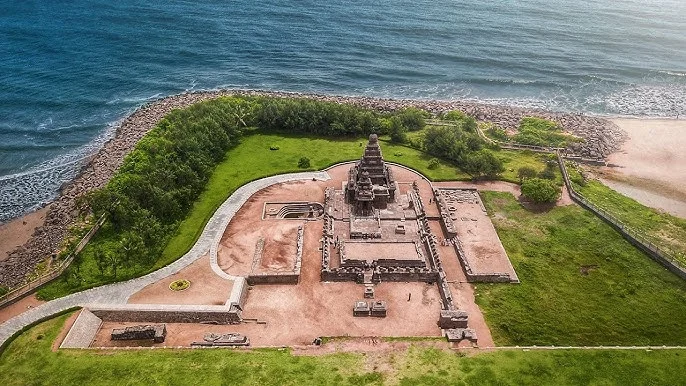
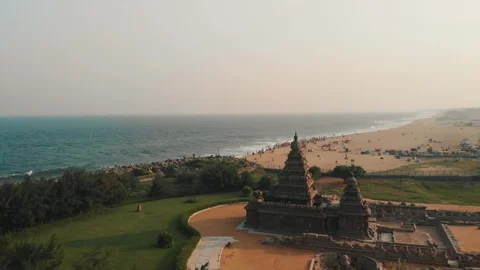
Around 700 CE, during the reign of the later Pallava kings (possibly Rajasimha), the magnificent Shore Temple was constructed. Built entirely of locally quarried granite, this temple stands as India’s oldest surviving stone temple — predating the grand temples of Kanchipuram and the later medieval temple boom. The Shore Temple was built directly on the coast, a daring architectural choice that required exceptional engineering to withstand the relentless ocean tides.
The temple’s three towers rising above the Bay of Bengal created an iconic silhouette that became the defining image of Mahabalipuram. Its construction marked a transition from rock-cut monolithic temples (rathas) to freestanding multi-story stone temples — a crucial evolutionary moment in South Indian temple architecture. The Shore Temple’s survival over 1,300 years of monsoons, tides, and geological shifts is a testament to both Pallava engineering and the quality of the granite used.
Decline, Rediscovery, and UNESCO Recognition
After the fall of the Pallava dynasty in the 9th century, Mahabalipuram gradually declined as a major political and trading centre. While it remained a sacred pilgrimage destination, the city’s monumental glory faded from historical prominence. Over centuries, sand gradually buried many of the rock-cut monuments, and the coastal erosion threatened even the iconic Shore Temple.
The city was rediscovered by European scholars and archaeologists in the 19th century. The remarkable preservation of the Pallava monuments — many still buried and gradually being excavated — captured the attention of historians and art scholars worldwide. In 1984, Mahabalipuram was inscribed as a UNESCO World Heritage Site, recognized as an “outstanding example of Pallava art” and “one of the most outstanding examples of Dravidian art and architecture.” Today, Mahabalipuram is not just a pilgrimage destination but a major focus of heritage conservation and art historical research. The site continues to reveal new discoveries through ongoing archaeological work and restoration efforts.
Easy Booking Process
Booking a cab from Tirupati to Mahabalipuram with Sevenhills Tours is simple and straightforward. We offer transparent pricing with no hidden charges, verified drivers, and AC vehicles for your comfort and safety.
Tirupati to Mahabalipuram
UNESCO World Heritage site · 150 km · AC cabs, verified drivers, transparent fares. Instant confirmation on call.
* One way pricing. Toll, parking & driver bata are party expenses. Early morning departure recommended for best experience.
Before You Visit Mahabalipuram
Mahabalipuram is an open-air museum with monuments spread across the coastal town. Here’s how to make your UNESCO heritage experience unforgettable.
Photography is Your Advantage
Mahabalipuram is a photographer’s paradise. The Shore Temple against the ocean, the Five Rathas in morning light, Arjuna’s Penance details — all are visually extraordinary. Bring a good camera or smartphone and allow time for multiple shots. Early morning and golden hour (sunset) offer the best light for monument photography.
Hire a Local Guide (Recommended)
While your driver knows the locations, a knowledgeable local heritage guide can explain the intricate mythology, sculptural details, and architectural significance of each monument. Guides at the UNESCO site entrance can be hired hourly. Their insights transform viewing stones into understanding Pallava history.
Bring Sun & Ocean Protection
Mahabalipuram is a coastal town with intense sun reflection off stone and water. Bring high-SPF sunscreen, a wide-brimmed hat, and sunglasses. The ocean breeze feels cool but the sun exposure is strong. Water, electrolyte drinks, and light snacks are essential — the heritage sites don’t have many eating facilities nearby.
Allocate 6–8 Hours for Monument Viewing
To properly experience Shore Temple, Five Rathas, Arjuna’s Penance, and other mandapas, allow a minimum of 6–8 hours. Rush visits miss the meditative quality and artistic details that make Mahabalipuram extraordinary. An early 6 AM departure from Tirupati allows arrival by 10 AM — plenty of daylight for thorough exploration.
Don’t Miss the Beach at Sunset
Mahabalipuram’s coastal location makes it unique among heritage sites. Spend the late afternoon at the beach, walk along the Shore Temple’s rocky shore, and watch the sunset over the Bay of Bengal. The spiritual atmosphere of temple ruins meeting ocean is deeply moving — this is not just an archaeological site but a sacred place of natural and human beauty.
UNESCO Site Entry & Timing
The UNESCO heritage zone is open sunrise to sunset. Entry fees are minimal (₹5–10 for Indians, slightly more for foreigners). Individual monuments like Shore Temple have separate entry. There are no major time restrictions — you can visit monuments in any order. Your driver will know which sections are best visited first for crowd management.
Witness Pallava Artistic Mastery
150 km from Tirupati · 4 hours drive · UNESCO World Heritage full-day tour · Instant confirmation.
Om Namah Shivaya · Heritage Awaits
Experience the UNESCO
Wonders of Mahabalipuram
Sevenhills Tours and Travels will take you from Tirupati to India’s most extraordinary coastal heritage site in just 4 hours — comfortable AC cab, verified local driver, designed for UNESCO world heritage exploration. Book now for early morning departure and full-day immersion in Pallava artistry.